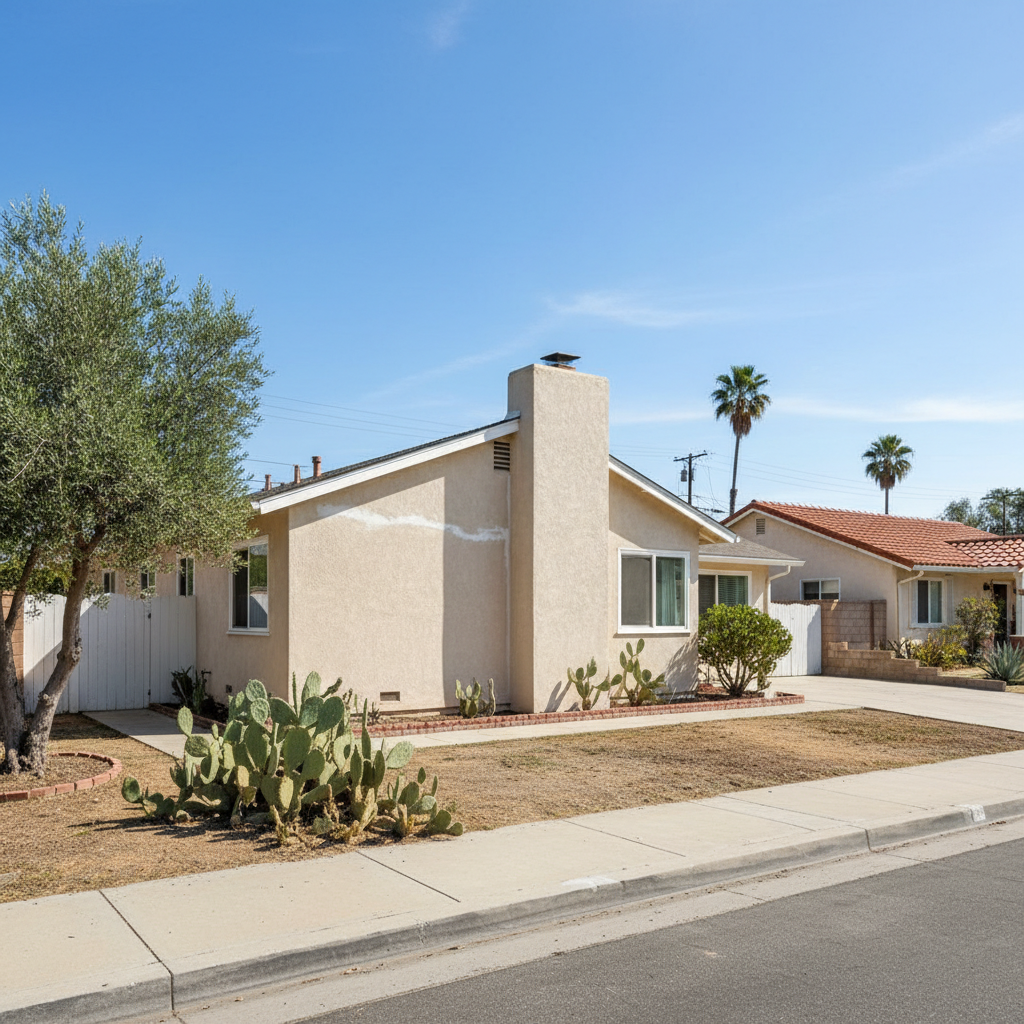
You've got cracks in your stucco, huh? It's a common sight around Downey, and honestly, it's one of the most frequent calls we get. But here's the thing: not all cracks are created equal, and knowing the difference is key to fixing them right the first time. You don't want to just slap some caulk on it and call it a day, because that crack is probably telling you something important about your home.
Hairline Cracks: Usually Just Cosmetic
Let's start with the easy stuff. You'll often see these tiny, spiderweb-like cracks, sometimes called hairline cracks or craze cracking. They're usually pretty shallow, barely breaking the surface of the stucco. Most of the time, these are just cosmetic. They happen when the stucco dries too fast, or maybe the mix wasn't quite right, or even just from normal expansion and contraction due to our Southern California sun. Think about how hot it gets in the summer, especially out in areas like the College Park West neighborhood where homes get a lot of direct sun exposure. That constant heating and cooling can put a little stress on the surface.
For these, a good quality elastomeric patch or a fresh coat of paint can often do the trick. It's about sealing the surface and making it look good again. We'll clean the area, apply the right material, and make sure it blends seamlessly. It's not usually a structural issue, but you still want to address it to prevent moisture from getting in and causing bigger problems down the line.
Pattern Cracks: Something's Moving
Now, if you start seeing cracks that form a distinct pattern – maybe a stair-step crack following your mortar joints, or a crack that's wider at the top and tapers down – that's when you need to pay closer attention. These aren't just surface-level issues. Pattern cracks usually indicate some kind of movement in the structure underneath the stucco.
- Stair-step cracks: These often show up around windows, doors, or where the foundation might be settling a bit. Our soil here in Downey, especially the clay-rich types you find closer to the San Gabriel River, can expand and contract with moisture changes. If your foundation isn't perfectly stable, that movement can transfer up to your walls and cause these cracks.
- Vertical or horizontal cracks: Sometimes these are due to framing issues, like lumber shrinking or shifting, or even just the natural settling of a house over decades. Remember, a lot of homes in Downey were built in the 50s and 60s; they've seen a lot of life and a lot of earthquakes!
- Cracks around openings: Windows and doors are weak points in any wall. If the framing around them isn't properly reinforced, or if there's too much stress on the lintel (the beam above the opening), you'll see cracks radiating out from the corners.
When we see these kinds of cracks, we don't just patch them. We investigate. We're looking for the root cause. Is it foundation movement? Is it a drainage issue causing soil expansion? Is there a leak somewhere? Just patching these without addressing the underlying problem is like putting a band-aid on a broken bone – it won't hold, and the crack will just come back, often worse.
Bulging or Delaminating Stucco: Moisture is the Enemy
This is where things can get serious. If you see areas of your stucco that are bulging out, or if it sounds hollow when you tap on it, or if pieces are actually flaking off (what we call delamination), you've almost certainly got a moisture problem. Water is getting behind the stucco, and it's causing the material to lose its bond to the wall. This can lead to dry rot in the wood sheathing and framing underneath, and that's a much bigger, more expensive fix.
Moisture can get in through unsealed cracks, faulty flashing around windows or roofs, or even just poorly installed stucco in the first place. We see this a lot in older homes where the original waterproofing wasn't up to today's standards. When we tackle this, it's not just a repair; it's often a partial re-stucco of the affected area, making sure the waterproofing layers underneath are solid and properly installed. You can't skip steps here.
Why Local Expertise Matters for Your Downey Home
Look, anyone can patch a crack. But understanding the specific challenges of stucco in Downey – the climate, the soil, the age of the housing stock, even the common building practices from decades ago – that's where local expertise comes in. We've been working on homes from the small ranches near the Civic Center to the larger properties in the Downey Estates for years. We know what to look for, what problems are common in which areas, and how to fix them so they last.
When you call Downey Stucco & Plastering, you're not just getting a crew; you're getting someone who understands your home's likely history and what it needs to stay strong and beautiful for years to come. Don't let those cracks become bigger headaches. Get 'em checked out right.